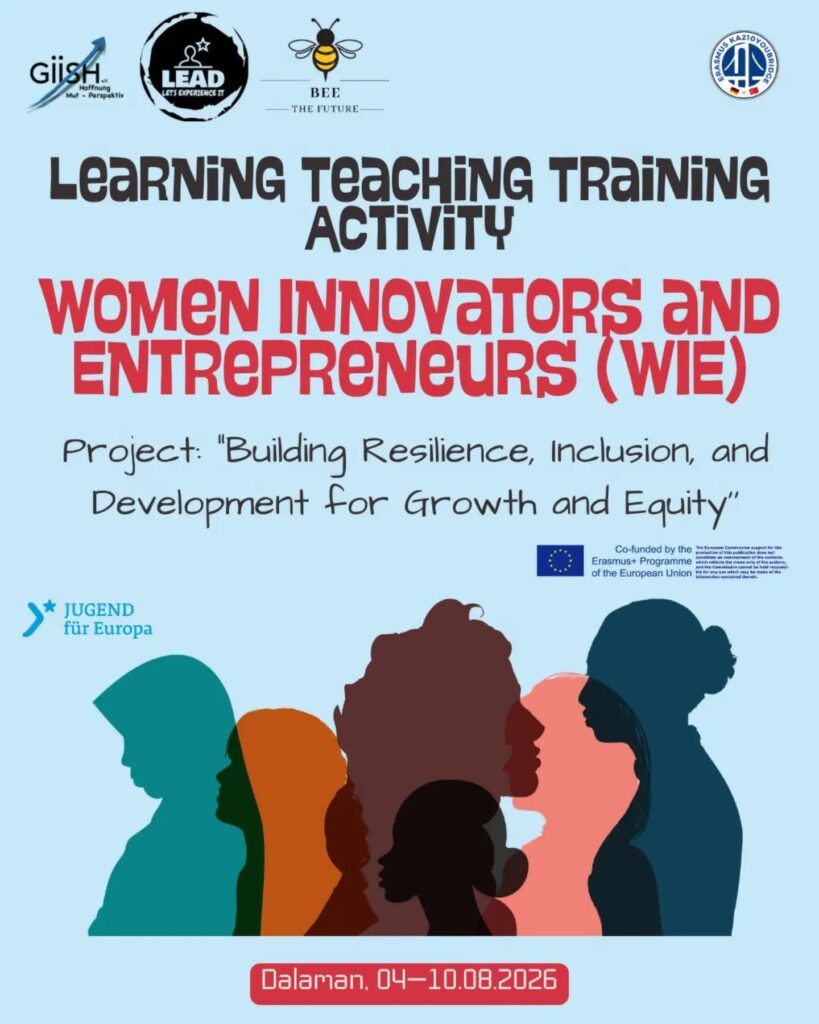
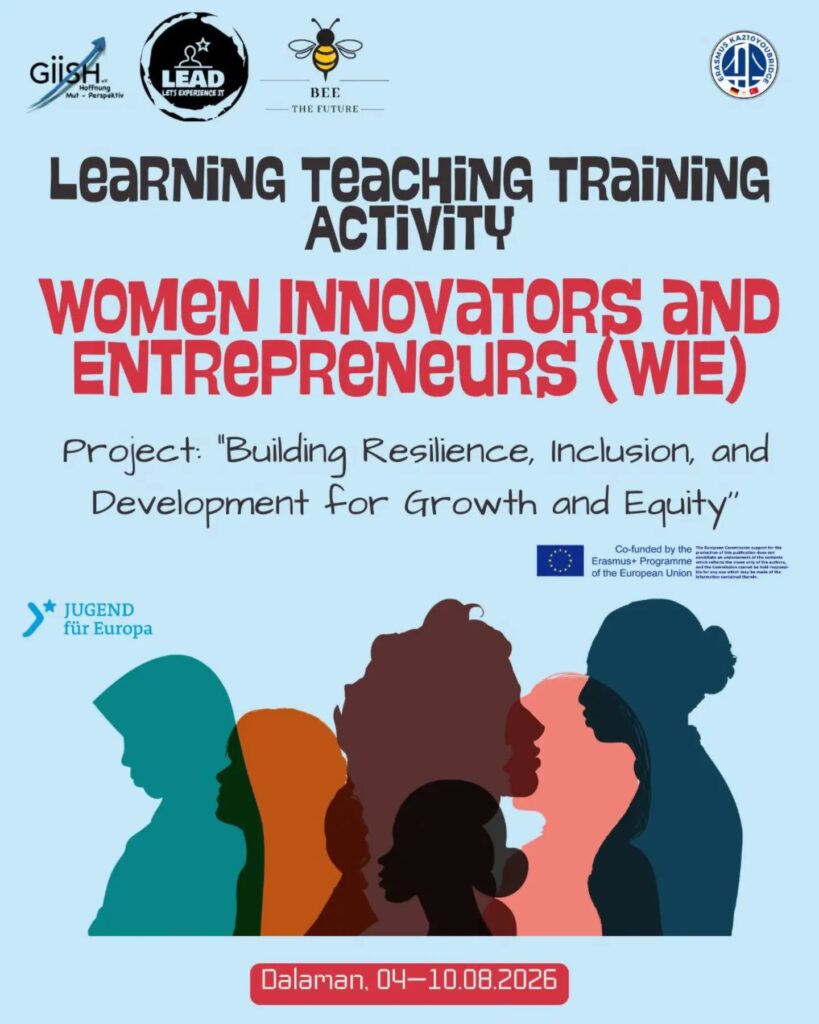
Learning, Teaching and Training Activity (LTTA) | Erasmus+ KA210 Small-scale Partnership – BRDIGE
2025-1-DE04-KA210-YOU-000352842 – Project code
📍 Location: Dalaman, Türkiye 🇹🇷
📅 Dates: 4–10 August 2026
Learning, Teaching and Training Activity (LTTA) | Erasmus+ KA210 Small-scale Partnership
📍 Location: Dalaman, Türkiye 🇹🇷
📅 Dates: 4–10 August 2026
🤝 Participating organisations: GIISH, LIDER and Bee the Future CY
🇨🇾 Bee the Future CY: Three youth workers represented our organisation during this international learning activity.
Introduction: Building Resilience, Inclusion and Opportunities for Growth
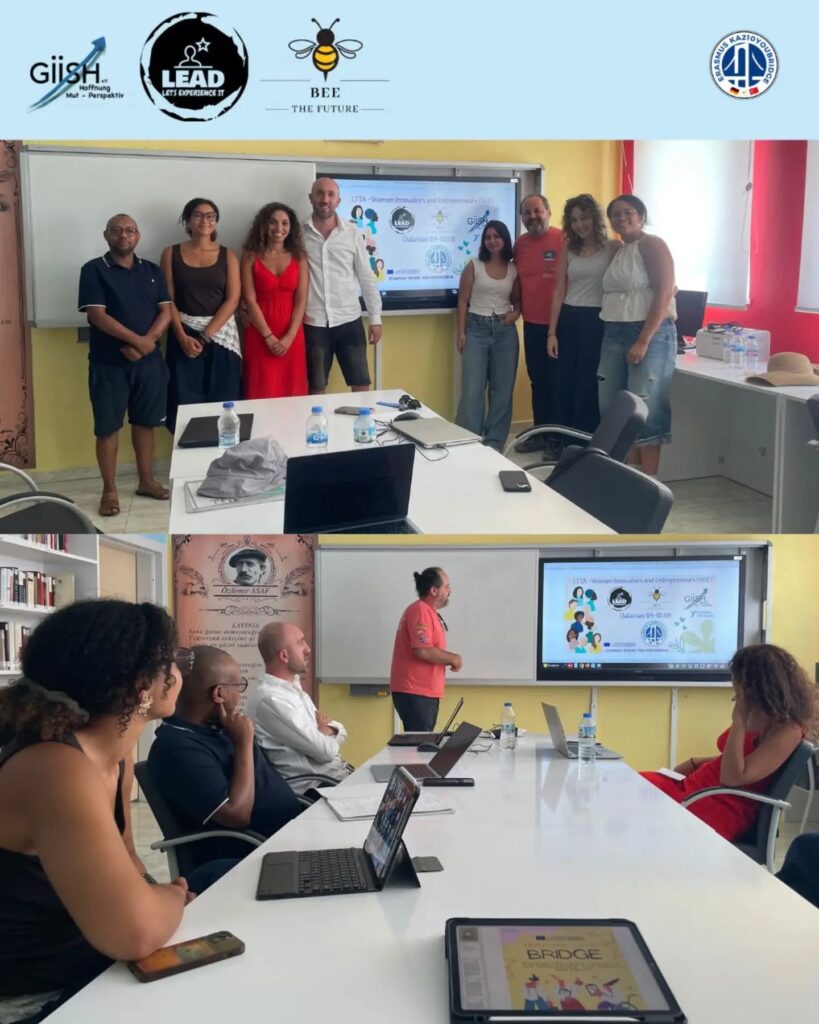
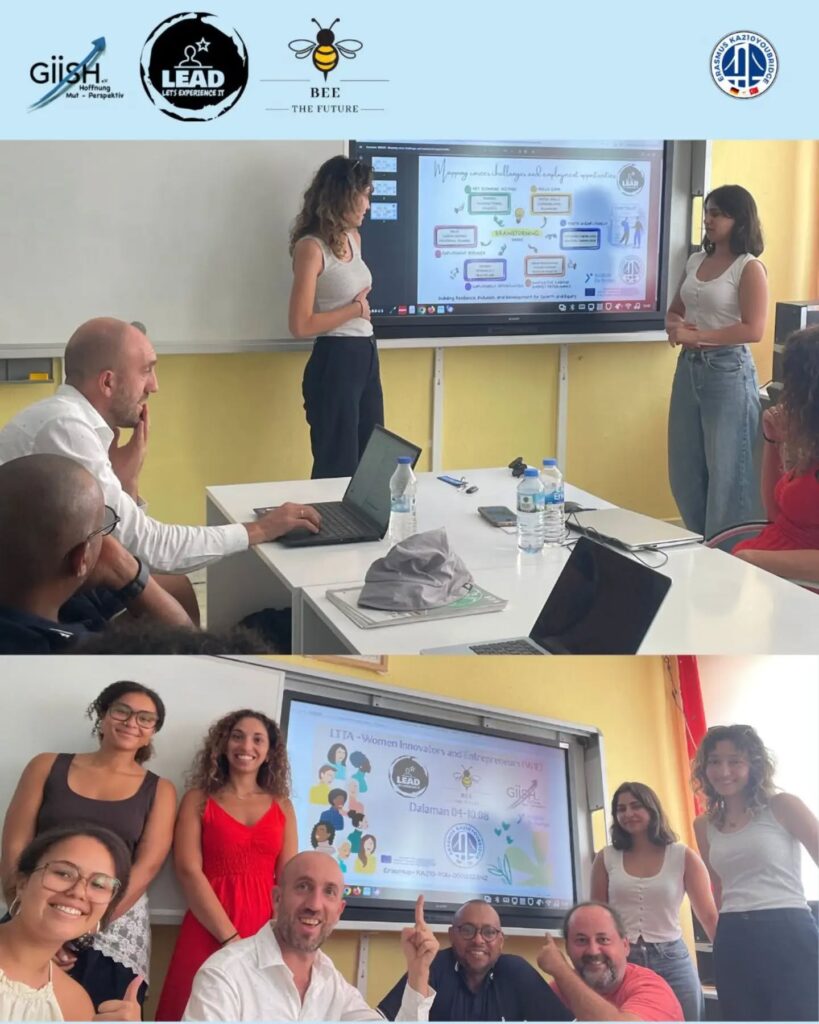
From 4 to 10 August 2026, Dalaman, Türkiye, became a meeting point for creativity, ambition, innovation and international cooperation as representatives of GIISH, LIDER and Bee the Future CY came together for the Learning, Teaching and Training Activity (LTTA) entitled “Women Innovators & Entrepreneurs – WIE.”
The activity was organised within the framework of the Erasmus+ KA210 Small-scale Partnership project, “Building Resilience, Inclusion, and Development for Growth and Equity.” It brought together participants from partner organisations to explore the role of women in entrepreneurship, innovation, personal development and economic participation, while strengthening the competences of those working to promote inclusion and empowerment in their communities.
Bee the Future CY was represented by three youth workers who actively participated in the learning process, contributing their perspectives, sharing experiences from Cyprus and exploring approaches that can be transferred into future youth work and community-based activities.
The LTTA provided an opportunity to connect theory with practice, exchange ideas across different cultural and professional contexts, and examine how entrepreneurship can become a meaningful pathway towards independence, creativity, confidence and new opportunities.
Beyond the acquisition of knowledge and practical competences, the activity emphasised the importance of collaboration, peer learning and mutual support. It demonstrated that empowering women is not simply about encouraging individual achievement; it is also about building supportive environments in which women can develop their ideas, access opportunities, overcome barriers and contribute to the social and economic development of their communities.
Understanding the Importance of Women Innovators and Entrepreneurs
Women play an essential role in the development of local economies, the creation of innovative solutions and the strengthening of communities. Through entrepreneurial initiatives, women can transform personal interests, professional experience and community needs into ideas that generate social, cultural and economic value.
However, the journey from an idea to a sustainable initiative is not always straightforward. Women who wish to establish businesses, develop social enterprises or introduce innovative solutions may encounter barriers related to access to information, professional networks, financial resources, digital competences, confidence and opportunities for mentorship.
These challenges can be particularly significant for women experiencing social or economic exclusion, women with fewer opportunities, and those seeking to re-enter education or employment after periods of interruption.
The WIE learning activity addressed these themes by creating space for participants to examine entrepreneurship as a process of learning, experimentation, problem-solving and continuous development.
Participants were encouraged to consider what makes an idea valuable, how innovation responds to real needs, and why personal motivation must be accompanied by planning, adaptability and an understanding of the environment in which an initiative operates.
The activity also reinforced an important message: entrepreneurship is not limited to establishing a conventional business. It can include developing a social enterprise, introducing a new community service, creating an educational initiative, improving an existing organisation or developing an innovative response to a local challenge.
This broader understanding is particularly relevant to youth work and non-formal education, where creativity, initiative and community engagement are essential elements of professional practice.
Learning Through International Cooperation and Non-Formal Education
The LTTA provided an international learning environment in which participants could explore new concepts, exchange experiences and reflect on their professional practice.
Bringing together GIISH, LIDER and Bee the Future CY created opportunities to compare perspectives from different organisational and cultural contexts. Participants could consider how approaches to women’s empowerment and entrepreneurship might differ according to local circumstances, while identifying common challenges and opportunities that connect communities across borders.
International cooperation is one of the most valuable dimensions of Erasmus+. It allows participants to move beyond the limits of their immediate working environments, discover alternative approaches and develop a wider understanding of European cooperation and shared social challenges.
The activity placed importance on experiential learning, active participation, dialogue and reflection. Rather than treating participants solely as recipients of information, the learning process encouraged them to contribute their own experiences, engage with different perspectives and consider how newly acquired knowledge could be applied in practice.
Peer learning played an important role in this process. By exchanging experiences, participants could learn from one another’s professional backgrounds, discuss different approaches to empowerment and explore practical ways of supporting women who wish to develop their entrepreneurial potential.
For Bee the Future CY, the participation of three youth workers represented an opportunity to strengthen the organisation’s capacity to integrate entrepreneurship, innovation and empowerment into future educational activities.
The knowledge gained through international cooperation can support the development of workshops, community activities and non-formal learning experiences that encourage young people and women to become more proactive in shaping their futures.
Developing an Entrepreneurial Mindset
An entrepreneurial mindset involves much more than the ability to establish a business. It includes recognising opportunities, taking initiative, approaching challenges creatively, making informed decisions and learning from experience.
Throughout the WIE activity, entrepreneurship and innovation provided a framework for reflecting on how individuals can turn ideas into practical initiatives.
Developing this mindset requires an understanding of the relationship between creativity and planning. An idea may begin with identifying a problem in the community, recognising an unmet need or imagining a better way of delivering a service. However, transforming that idea into a realistic initiative requires further steps, including defining objectives, identifying the intended audience, considering available resources and evaluating possible challenges.
For youth workers, understanding these processes is valuable because they can introduce entrepreneurial thinking into non-formal education without making business creation the only measure of success.
Young people can benefit from learning how to develop projects, organise community initiatives, communicate their ideas, cooperate with others and take responsibility for achieving shared objectives. These competences are transferable to education, employment, volunteering and active citizenship.
Similarly, women who are interested in entrepreneurship can benefit from opportunities to explore their strengths, identify areas for development, build confidence and become familiar with the steps involved in developing an idea.
The WIE activity highlighted the importance of creating learning environments in which participants are encouraged to experiment, ask questions, exchange feedback and understand that professional development is an ongoing process.
Innovation as a Tool for Addressing Community Needs
Innovation becomes particularly meaningful when it responds to a genuine need or improves an existing situation.
During discussions about innovation and entrepreneurship, the wider relevance of developing solutions that create value for individuals and communities provided an important learning perspective.
Innovation can involve introducing a new product or service, improving an existing process, using digital tools more effectively or finding a more inclusive way to engage people who are often excluded from traditional opportunities.
For example, a community initiative may use digital communication to reach women who cannot regularly attend face-to-face activities. A social enterprise may respond to a local environmental challenge while creating opportunities for employment. An educational project may introduce practical learning methods that help women develop professional competences and become more confident in pursuing their goals.
These examples demonstrate that innovation does not always require substantial financial investment or advanced technology. It can begin with careful observation, consultation with the people concerned and a willingness to test new approaches.
For youth workers, this perspective offers valuable opportunities to support young people in identifying challenges within their communities and developing constructive responses.
It also reinforces the importance of inclusive innovation. Successful initiatives should consider the different circumstances of the people they aim to support and avoid creating additional barriers for those with fewer opportunities.
By connecting entrepreneurship with social responsibility, the WIE activity encouraged participants to consider not only whether an idea is achievable, but also whom it benefits and what contribution it can make to the wider community.
Women’s Empowerment, Resilience and Confidence
Empowerment was a central theme of the Women Innovators & Entrepreneurs learning activity.
Women’s empowerment involves creating conditions in which women can recognise their abilities, make informed choices, participate in decision-making and pursue their personal and professional ambitions.
Confidence is an important part of this process, but it cannot replace access to opportunities, information, education and supportive networks. Meaningful empowerment requires both individual development and an environment that enables people to act on their ambitions.
The WIE activity offered an opportunity to reflect on how resilience, cooperation and continuous learning can help women navigate professional and personal challenges.
Resilience can be understood as the ability to adapt, learn from experience and continue developing when circumstances change. In entrepreneurship, this may involve reviewing an initial idea, responding to feedback, adapting to new circumstances or identifying alternative ways to achieve an objective.
Rather than presenting challenges as individual failures, an inclusive approach recognises that difficulties are a normal part of development and that appropriate guidance, peer support and access to resources can make a meaningful difference.
The exchange of experiences between participants also highlighted the value of learning from other people’s journeys. Hearing different perspectives can help individuals recognise new possibilities, question limiting assumptions and understand that professional paths do not always follow a single predictable direction.
For youth workers, these insights are particularly relevant when supporting young women who may be uncertain about their future opportunities or lack access to professional networks.
By providing encouragement, practical learning experiences and opportunities for participation, youth work can contribute to creating environments where women feel supported in exploring their potential.
Inclusion and Equal Access to Opportunities
The connection between entrepreneurship and inclusion was another important dimension of the project.
Although entrepreneurship can create opportunities for independence and professional development, access to these opportunities is not equal for everyone. Social circumstances, economic limitations, discrimination, limited networks and unequal access to information can influence whether individuals are able to develop their ideas.
For this reason, promoting women’s entrepreneurship requires approaches that recognise diversity and respond to the specific circumstances of different groups.
Women should not be treated as a single, uniform target group. Their experiences, ambitions, educational backgrounds, professional interests and support needs can differ considerably.
Inclusive educational activities therefore need to offer accessible information, practical guidance, flexible learning opportunities and environments in which participants feel respected and able to contribute.
Youth organisations and community-based associations can play an important role in this process. Through workshops, mentoring opportunities, peer-learning activities and partnerships with relevant stakeholders, they can help connect women with information, skills development and supportive networks.
For Bee the Future CY, these themes are closely connected to the organisation’s commitment to non-formal education, international cooperation and the promotion of opportunities for young people and communities.
The experience in Dalaman provided a valuable opportunity to reflect on how entrepreneurial learning can be integrated into inclusive youth work and how educational activities can encourage participants to identify their strengths and explore new professional possibilities.
The Role of Youth Workers in Supporting Women’s Entrepreneurship
Youth workers and community practitioners can serve as important facilitators of learning, confidence-building and participation.
Their role is not necessarily to act as business consultants or provide specialised financial advice. Instead, they can create learning environments in which young people and women are encouraged to develop transferable competences, explore their interests, identify opportunities and access appropriate sources of information and support.
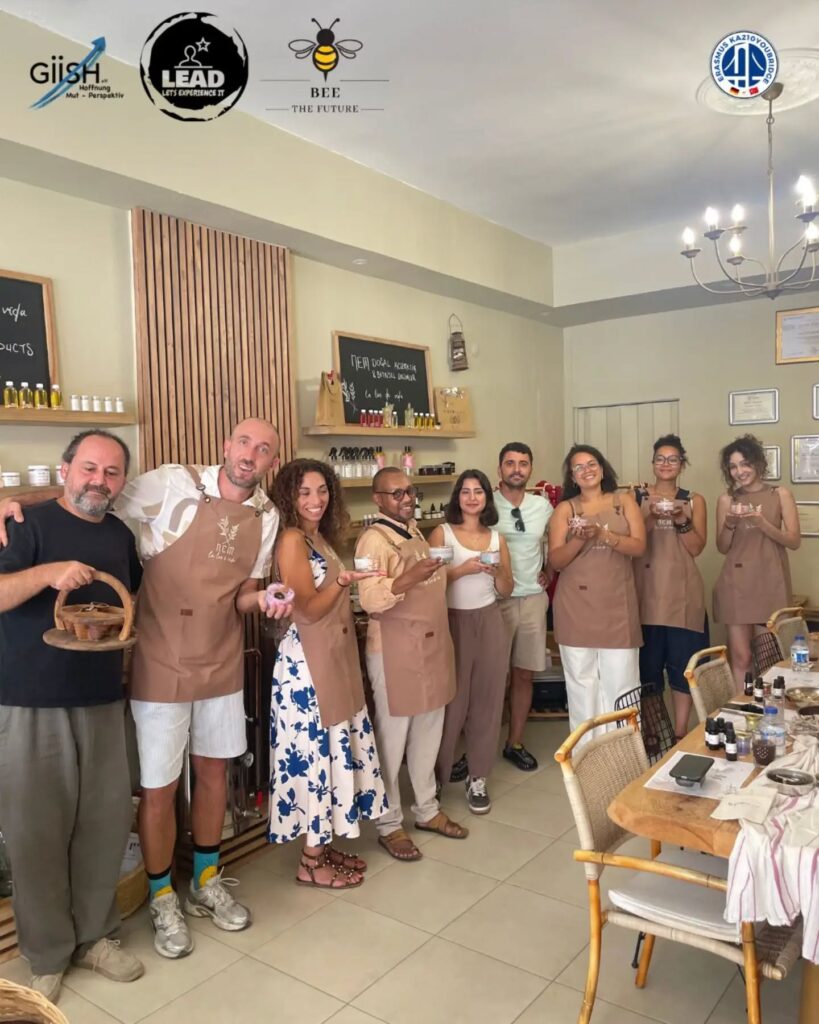
Non-formal education offers a flexible framework for this work. Through collaborative projects, simulations, group challenges, reflection exercises and community-based initiatives, youth workers can help participants develop communication, teamwork, creativity, problem-solving and initiative-taking skills.
These competences can support entrepreneurial development while remaining relevant to many other areas of life.
The LTTA also reinforced the importance of professional development among youth workers themselves. To provide meaningful support, practitioners need opportunities to exchange methods, reflect on their approaches and learn from initiatives implemented by organisations in other countries.
Participation in international learning activities allows youth workers to broaden their professional perspectives and build connections that may lead to future cooperation.
The three representatives of Bee the Future CY were therefore not participating only as individual learners, but also as members of an organisation that can bring the experience back into its local work.
By sharing knowledge with colleagues and adapting relevant approaches to local needs, they can contribute to strengthening the quality of future educational activities and creating additional opportunities for young people to engage with entrepreneurship and innovation.
International Partnership: GIISH, LIDER and Bee the Future CY
Cooperation between the partner organisations was an essential part of the WIE learning experience.
The participation of GIISH, LIDER and Bee the Future CY created a shared space for learning, professional exchange and the exploration of common objectives under the Erasmus+ project “Building Resilience, Inclusion, and Development for Growth and Equity.”
Each organisation brought its own experiences, working methods and understanding of the needs of its community. Bringing these perspectives together helped create opportunities for dialogue and mutual learning.
International partnerships are valuable because they allow organisations to compare approaches, identify transferable practices and consider how activities can be adapted to different local contexts.
They also create opportunities to build relationships that extend beyond a single mobility. The professional connections established through an LTTA can support further cooperation, joint initiatives and the continued exchange of ideas.
For small-scale partnerships in particular, this form of cooperation can strengthen organisational capacity while keeping learning accessible, practical and connected to clearly identified needs.
The WIE activity demonstrated the importance of investing in people and relationships as part of long-term organisational development. When participants return to their organisations with new perspectives, practical insights and international contacts, the benefits of mobility can extend into their future professional activities.
Bee the Future CY: Bringing International Learning Back to Cyprus
Three youth workers from Bee the Future CY took part in the Learning, Teaching and Training Activity in Dalaman from 4 to 10 August 2026.
Their participation represented an opportunity to strengthen their understanding of entrepreneurship, innovation, resilience and women’s empowerment while learning alongside representatives of the partner organisations.
For Bee the Future CY, the value of an international learning activity lies not only in the experience of those who attend, but also in the potential to transfer relevant learning into future organisational practice.
The knowledge and perspectives gained through the WIE activity can inform the organisation’s approach to non-formal education, particularly in activities that encourage initiative, creativity, personal development and inclusion.
Potential applications include workshops on entrepreneurial thinking, activities focused on identifying personal strengths, project-development exercises, discussions about social innovation and educational sessions that help young people explore pathways towards employment and active participation.
The experience can also strengthen the organisation’s ability to connect local youth work with wider European priorities, including inclusion, equal opportunities, innovation and lifelong learning.
By sharing relevant learning with colleagues, partners and participants in future activities, the three youth workers can help ensure that international mobility contributes to ongoing organisational development rather than remaining an isolated experience.
This multiplier effect is an important element of Erasmus+: participants bring knowledge across borders, adapt it to their own contexts and create opportunities for others to benefit from the experience.
Erasmus+ and the Value of Learning Without Borders
The WIE activity illustrates the wider purpose of the Erasmus+ programme: enabling people and organisations to learn from one another, develop competences, strengthen international cooperation and contribute to positive change.
International learning activities provide more than an opportunity to visit another country. They create structured opportunities for participants to challenge assumptions, discover different approaches, communicate across cultures and develop a broader understanding of shared challenges.
In Dalaman, the focus on women innovators and entrepreneurs connected professional development with important social objectives, including inclusion, resilience, equal access to opportunities and community development.
The activity also highlighted the importance of investing in youth workers and community practitioners. By strengthening their competences, organisations can improve the quality of the learning experiences they offer and respond more effectively to the needs of their target groups.
The benefits of Erasmus+ cooperation can therefore extend beyond the participants themselves. Through the transfer of learning, local implementation and continued partnerships, international activities can contribute to stronger organisations and more supportive communities.
The WIE experience was another reminder that meaningful change often begins when people from different backgrounds come together with a shared willingness to learn, cooperate and explore new possibilities.
Looking Ahead: Turning Learning into Action
The conclusion of the LTTA in Dalaman marked the end of one international learning experience, but it also provided a foundation for continued reflection and development.
The ideas explored throughout the activity offer opportunities to consider how entrepreneurship, innovation and empowerment can be incorporated into future youth work and community-based educational activities.
For Bee the Future CY, the participation of three youth workers represents an opportunity to build on the knowledge gained, exchange insights within the organisation and explore relevant ways to support young people and women in developing their competences and pursuing their ambitions.
The wider project also underlines the importance of maintaining cooperation between the partner organisations and ensuring that learning contributes to the project’s overall objectives.
Ultimately, empowering women through entrepreneurship is about more than creating businesses. It is about expanding possibilities, strengthening confidence, recognising talent and helping people access the knowledge, networks and opportunities they need to turn ideas into action.
It is about ensuring that innovation is inclusive, that resilience is supported through cooperation, and that personal ambition can contribute to collective progress.
Conclusion: Women with Ideas, Women with Courage, Women Creating the Future
From 4 to 10 August 2026, Dalaman became a space for learning, exchange and inspiration through the Erasmus+ LTTA “Women Innovators & Entrepreneurs – WIE.”
The activity brought together GIISH, LIDER and Bee the Future CY within the project “Building Resilience, Inclusion, and Development for Growth and Equity,” creating opportunities to explore entrepreneurship, innovation, women’s empowerment and the role of international cooperation in supporting positive change.
For Bee the Future CY, the participation of three youth workers was an important opportunity to strengthen professional competences, discover new perspectives and reflect on how the learning experience can contribute to future activities in Cyprus.
The most meaningful outcomes of international cooperation are not limited to the knowledge acquired during a mobility. They are also reflected in the connections established, the ideas exchanged, the confidence developed and the possibilities created for future action.
We would like to thank our project partners, GIISH and LIDER, as well as everyone who contributed to this valuable learning experience. Their participation and cooperation helped make the activity an opportunity for professional development, intercultural understanding and shared reflection.
As Bee the Future CY, we remain committed to promoting non-formal education, inclusion, youth empowerment and international cooperation. We believe that every person should have the opportunity to explore their potential, develop their ideas and contribute to the communities around them.
Women with ideas. Women with courage. Women creating the future.
Together, through learning, cooperation and action, we can help build a more inclusive environment where women are encouraged to innovate, lead, develop their potential and transform opportunities into meaningful achievements.